
In the shadow of Mount Erciyes — a dormant volcano towering over Cappadocia — sits a farm that has been in one family for generations. What makes Vinolus remarkable is who decided to make wine on this land, and how.
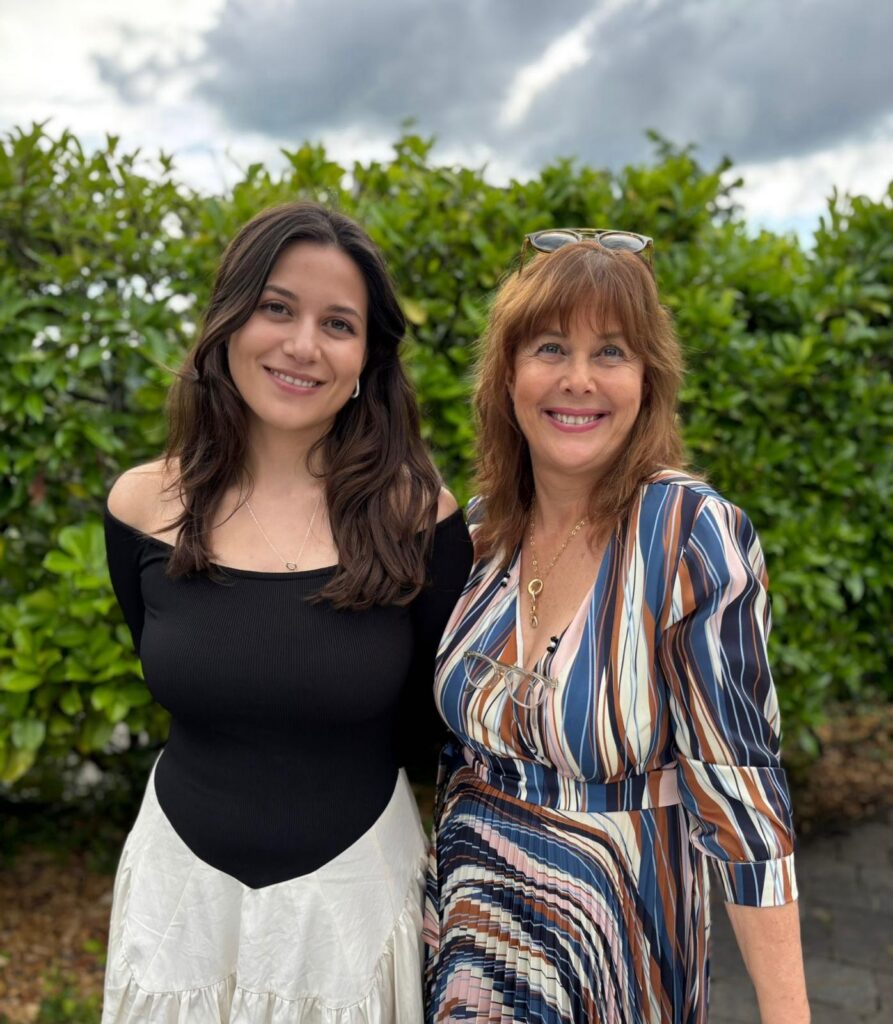
Vinolus was founded by Oluş Molu, a biologist and entrepreneur who took over her family’s farm near Kayseri and turned it into one of the very few vineyards in Türkiye to earn ORSER organic certification. The name is her signature, literally built into the label — VIN + OLUŞ — and the first vintage was released in 2009. She is, by her own account, the first person to produce wine in Kayseri, an area steeped in traditional culture. It was a striking step in a place where, in her grandfather’s day, it was only after the young Republic was secularised that he could openly distil rakı. Molu describes it simply as good fortune: the chance to do this on a farm that has belonged to her family for generations.
From the start, Vinolus was as much an environmental project as a winery. Oluş Molu took over the family farm in the early 2000s to create what is described as the first ecological farm in Türkiye. She became the first person to start organic farming in the region and went on to found KAPTAR, the Cappadocia Organic Producers Association.
The project spans around 12 hectares, planted with native varieties such as Kalecik Karası and Narince alongside international grapes including Chardonnay, Roussanne and Tempranillo. The vines grow on their own rootstock across both goblet-trained and trellis-trained vineyards, with vine ages ranging from 15 to 38 years, all located at an altitude of around 1,100 metres.
Crucially, Molu keeps things small on purpose. Production is held to around 30,000 bottles a year so as not to compromise the ideals of the ecological project or the winery’s organic certification — quality and principle placed firmly ahead of volume. To bring the wines to life, she works with Spanish oenologist José Hernández, the same winemaker behind Heraki and Yaban Kolektif. Hernández has said it was Molu’s own vision and philosophy, discovered during a visit to Kayseri, that persuaded him to commit to working in Türkiye.
Cappadocia is one of the world’s oldest wine regions. Grape-growing here reaches back some five thousand years to Hittite times, when more than twenty articles of the kingdom’s legal code already concerned wine.
Vinolus draws on that deep history, but the wines taste unmistakably of their own patch of ground. The region’s high altitude, hot days, cool nights and, above all, volcanic soils give the wines their freshness, tension and edge. That volcanic signature is the estate’s calling card.
Its Kalecik Karası — a grape often called Türkiye’s answer to Pinot Noir — comes out savoury rather than sweet, leaning brick-red, with red fruits, crushed herbs, a whiff of leather and an edgy herbaceousness that sets it apart from softer versions of the grape.
The whites, built around the ancient Cappadocian Emir and the delicate Narince, are exactly the kind of dry, nervy, high-altitude wines that volcanic soils seem made for. Vinolus is regularly recognised as one of the producers working most compellingly with these indigenous grapes.
The winery has also recently started producing traditional-method sparkling wine with the local Emir grape, recognising the region’s natural potential for high-acidity, fresh and expressive sparkling wines.
The estate’s reputation is now well established. Two Vinolus wines took gold at the Turkish Wine Challenge in 2023 — the Emir 2021 and the Kalecik Karası 2021 — and the winery has become a fixture of Cappadocia’s growing wine-tourism scene, complete with its own boutique hotel, Sunolus Vineyard Hotel.
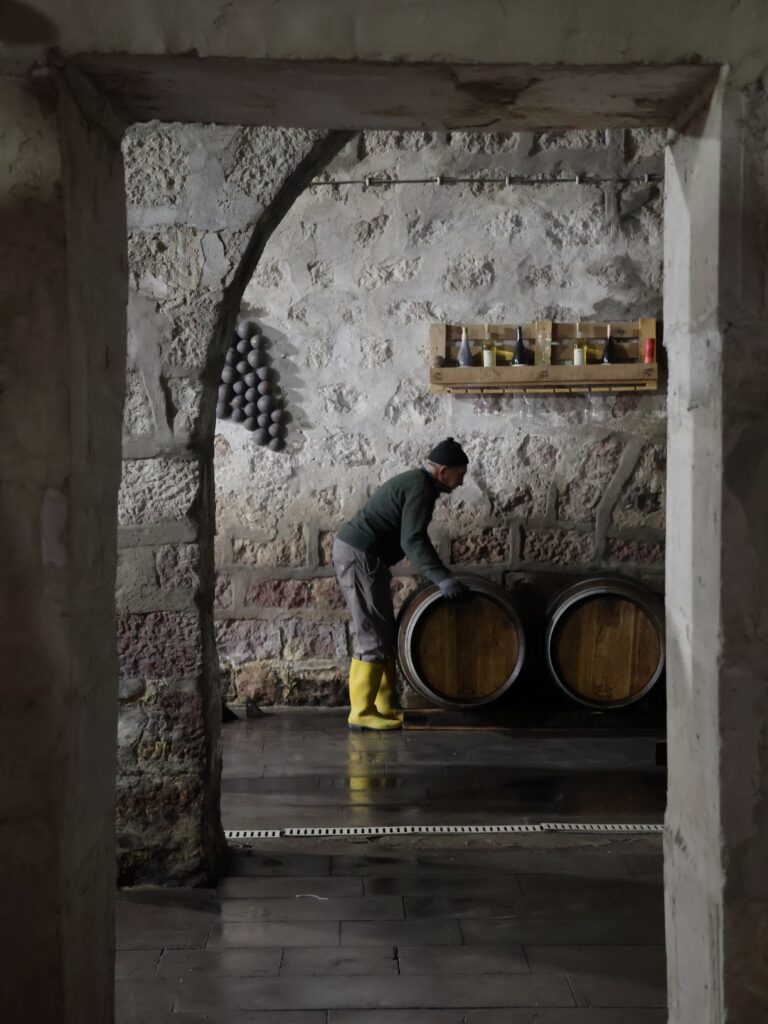
It also plays quiet host to others’ conservation work. When the Yaban Kolektif team needed a cellar to vinify their near-extinct Sungurlu grape, it was at Vinolus that they made their dry wine, pét-nat and straw wine.
Vinolus is what happens when a scientist’s rigour meets a genuine love of place: organic, small-scale, volcanic wines from a Cappadocian farm that a biologist chose to make her life’s work. Today, Vinolus remains a deeply family-led project, with Oluş Molu now running the winery alongside her daughter, Sıla. Together, they continue to build on the estate’s ecological foundations while shaping its next chapter.
Foxes & Grapes takes its name from the ancient Greek fable by Aesop — a story about desire, perspective, and how we sometimes convince ourselves that something just isn’t worth it simply because it feels out of reach.
In 2025, we opened Foxes & Grapes Wine Bar in Brussels with a simple philosophy: wine should be enjoyed, explored, and shared by everyone.
Within our first year, the bar received a Red Star and later a Silver Star from Star Wine List, and was recognised as a finalist for Best Newcomer Wine Bar in Belgium.
Operating the bar also helped us reflect on the long-term direction of the project. The traditional wine bar model did not fully align with the broader vision we had for Foxes & Grapes.
So we decided to evolve.
Today Foxes & Grapes is growing into a platform built around three pillars:
What began as a wine bar is becoming something bigger: a space where curiosity, discovery, and great bottles come together.
And this is only the beginning.